Blog
Artist Spotlight: Ty Martin
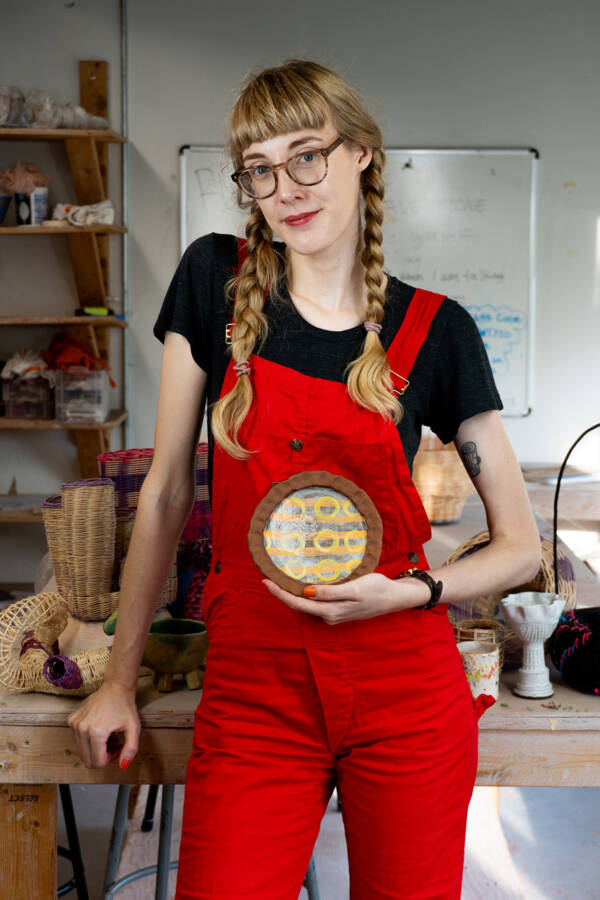 Ty Martin (she/they) is a multimedia artist specializing in ceramics, basketry, found materials, and fiber, and member of VisArts’ Spring/Summer 2026 cohort of Studio Access Residents. Ty’s work playfully layers interrupting patterns to create hypnotic rhythms. The imperfection of these layers is intended to be an unsolvable puzzle for the viewer. When a perfect pattern rule cannot be found, the viewer has an opportunity to shake loose from the need to understand, and to engage instead with the aliveness of what is.
Ty began her studies in environmental science before earning a master’s degree in social work and Reiki certification. Through her work in healing spaces, she hopes to empower people to access belonging and meaning outside of consumer culture. Ty has been a resident artist and assistant at Penland School of Craft, Arrowmont School of Arts and Crafts, John C. Campbell Folk School, and Touchstone Center for Crafts.
Partway through Ty’s six-month residency, we met up with her in one of VisArts’ clay studios to learn more about her creative practice for her current series of “OK” art.
VisArts: What was your first interaction with VisArts?
Ty: One of the first things I did when moving to Richmond was to sign up for a class at VisArts! I took a workshop with Lil Lamberta learning to make larger-than-life puppets for the All the Saints Halloween parade.
What are you working on during your residency?
During this residency, I’ve given myself the prompt to make “OK art”. As someone who works in mental health, I spend a lot of time thinking about what it means to be “OK,” how we measure “enough-ness,” and the act of physical creation as medicine for modern life. By creating art that perseverates on the word “OK,” the inherent meaninglessness of that phrase as a judge is on display.
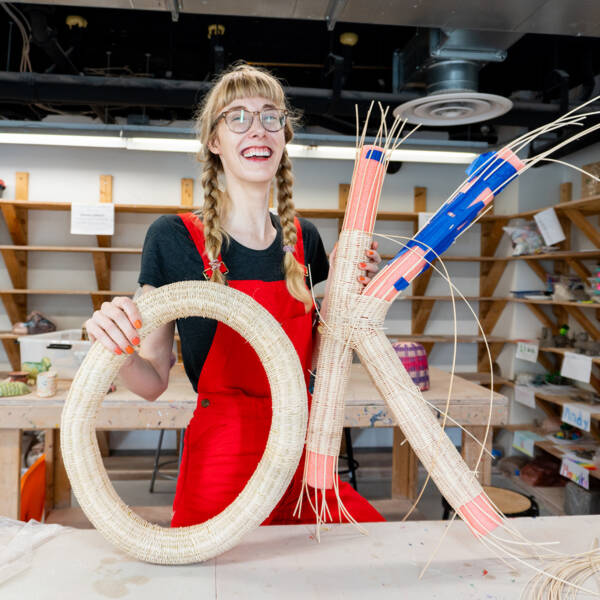
On another level, the prompt of “OK” is a challenge to the black-and-white thinking in our culture (and sometimes in myself) around the success of the finished product being a measure of our permission to create art. We don’t believe that exercise is only worthwhile for aspiring professional athletes, yet it’s normal in our culture to label people as either “creative” or, if people believe their work is not of a certain quality, “not artistic.” Do we believe that ordinary art, and for that matter ordinary life, is somehow insufficient unless it eventually becomes exceptional? And who have we internalized in our invisible audiences to judge our art and our lives? My work is about learning to not just tolerate imperfection, but to actually enjoy the friction and aliveness of imperfection.
So during this residency, I’m deliberately trying to make work without asking it to prove anything. There is an enormous sense of relief in remembering that I’m not special, that I’m not important, that I’m not a famous artist — I’m just someone who wants to live fully while I’m here. What freedom!
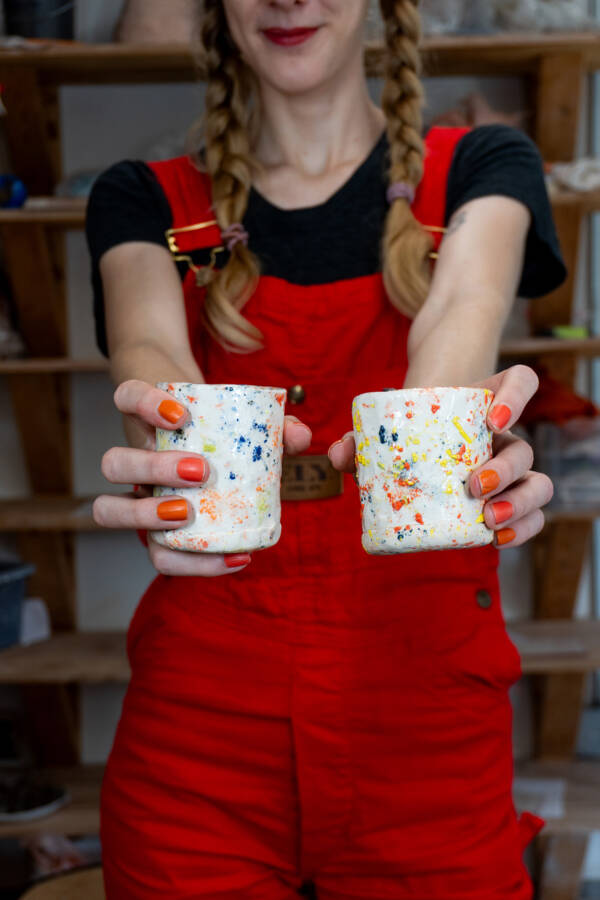
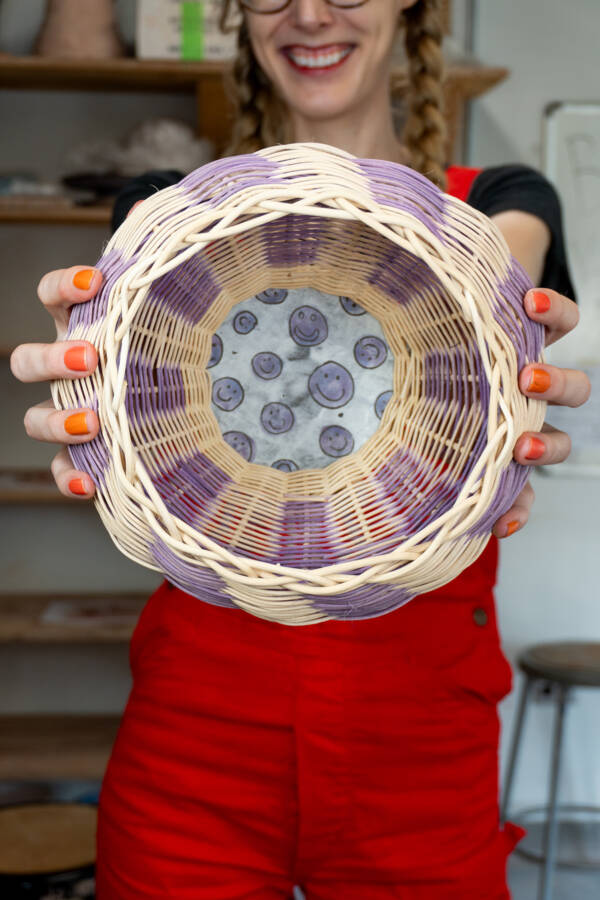
How were you drawn to the medium(s) you work in?
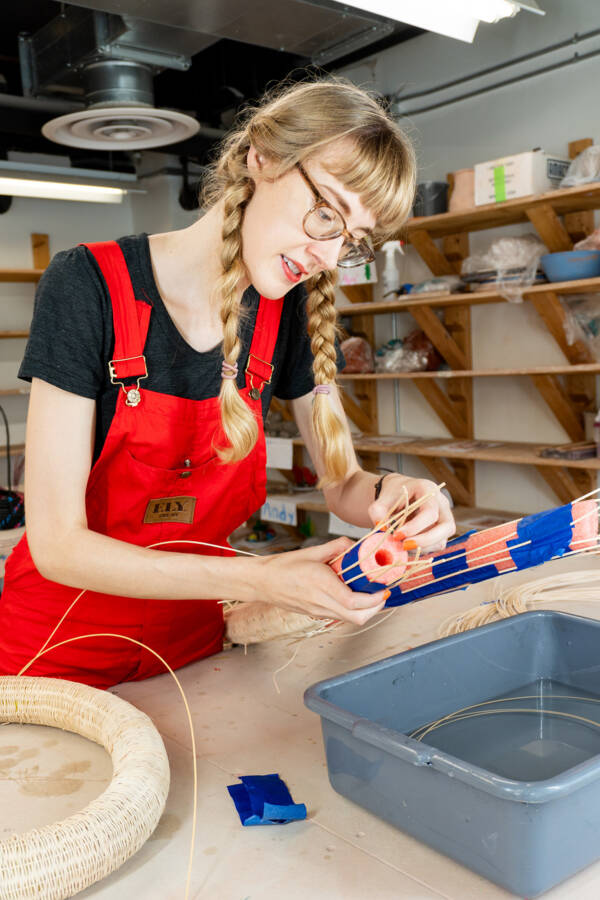
In 2019, I made a list of all the reasons why I shouldn’t quit my job to accept a work/study scholarship at Penland to learn pottery for 8 weeks. Looking at the list, none of the reasons were good enough, so off I went. Ever since, I’ve been in love with the iterative nature of making pottery. I could work with clay for the rest of my life and never run out of new things to explore. In basketry, I’m primarily drawn to the hypnotic rhythm of the process itself. But across all mediums, the thing I always return to is the feeling I get from learning something new.
 What are some of your sources of inspiration?
Most of my inspiration takes the form of curiosity about “What would happen if…?” What if I tried to make this same piece with a different technique, or used a new material, or combined things I’ve tried before? Another major inspiration for me is the support I get from the relationships I’ve made when making art. I’ve been extremely lucky to be part of the larger craft school community since attending my first workshop in 2019. Assisting immersive workshops and attending residencies has given me the chance to experience an alternative to the hectic screen-mediated norm, and that steady, connected energy is something I try to internalize when I’m in the studio at home.
Separating the act of analysis from creation has also been helpful to give space for something new to come through — just play, let it fail, and use what you learned on the next piece. As a social worker, I’m always learning new interventions and honing techniques, but no skill comes close to the impact of being fully, genuinely present. The skill I’m most interested in developing as an artist is being more genuinely present with myself, my materials, and my community in craft.
Interests and opinions expressed by artists-in-residence are their own. Learn more about VisArts’ organizational values and code of conduct.