Blog
Turning Heads: A Conversation with Rowell Concepcion of Binata Millinery
The Visual Arts Center of Richmond is proud to recognize Rowell Concepcion of Binata Millinery as the Emerging Artist at this year’s Craft + Design.
Starting in 2024 for the 60th anniversary of Craft + Design, the Visual Arts Center of Richmond has celebrated an emerging artist—a craft artist who has been in their current practice for ten years or less—exhibiting at the show. In 2024, we highlighted Connecticut-based jeweler, Rashana Miller of Free Maiden, and in 2025, Pittsburgh-based sculptor, Teresa Audet.
 Rowell Concepcion is a Filipino-American milliner and the founder of Binata Millinery, a New York-based headwear house established in 2020. Drawing from traditional millinery techniques, he handcrafts sculptural hats that blend old-world craftsmanship with a contemporary perspective. Working primarily in felt, straw, and natural fibers, his practice explores the intersection of fashion, artistry, and storytelling through wearable objects.
A graduate of the Fashion Institute of Technology (FIT), Rowell studied both millinery and fashion merchandising before dedicating his career to preserving and advancing the craft of hat-making. His work has been worn by artists including Lady Gaga and Janelle Monáe, featured in publications including The New York Times, Vogue, and Harper’s Bazaar, and commissioned for collaborations with brands and designers including Vogue for Rosalía, Monique Lhuillier, and Simkhai for Kerry Washington’s Met Gala appearance.
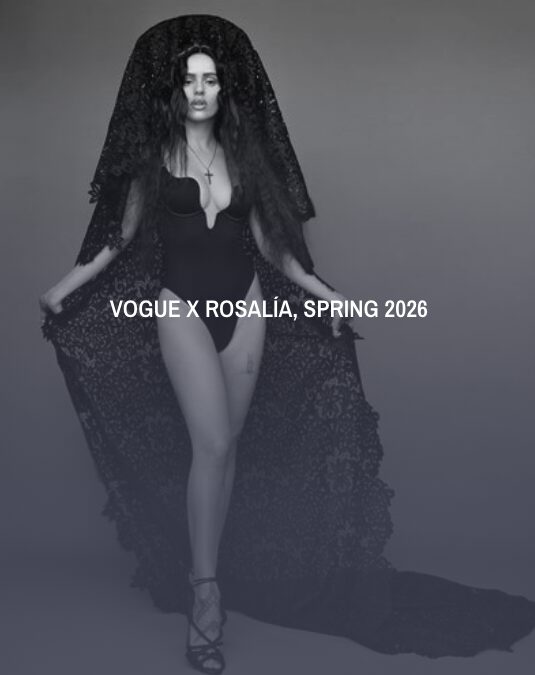
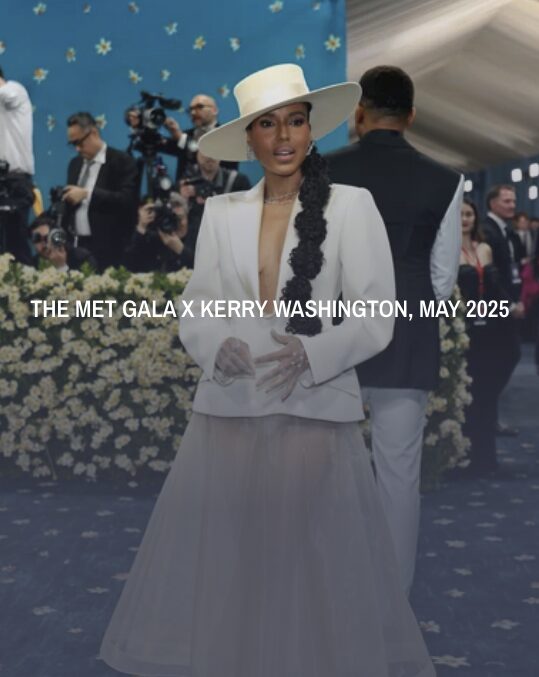
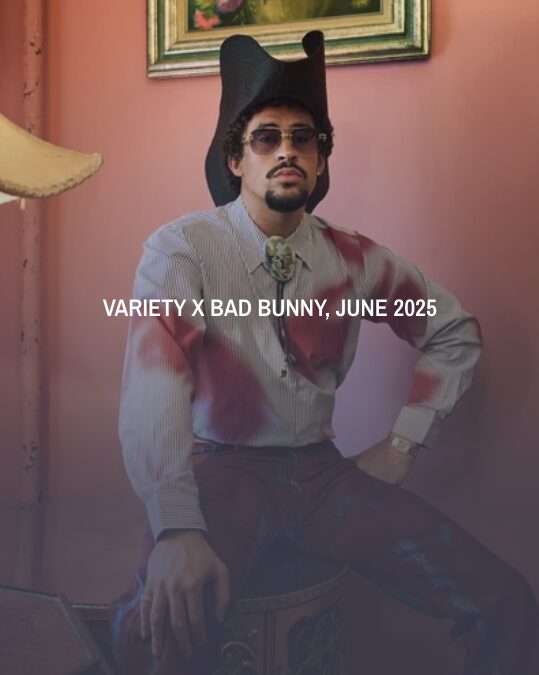
Binata Millinery received the 2024 Accessories Council Design Excellence Award and was a finalist for the 2024 Fashion Trust U.S. Awards.
Committed to keeping the craft of millinery alive, Rowell’s long-term vision is to teach, train, and employ artisans in his parents’ home provinces in the Philippines while building a dedicated millinery studio in Queens, New York, creating opportunities for the next generation of makers.
Ahead of Craft + Design (November 20-22), Rowell kindly took some time out of his star-studded schedule to talk to us about how he fell in love with millinery, how he honors the craft’s history, and how to start adding hats to your personal style.
VisArts: How did millinery capture your attention?
Rowell Concepcion: I’ve always had an affinity for hats, but everything clicked after I took my first millinery course at FIT. I just knew this was what I was meant to do. The process felt incredibly intuitive, and I quickly realized I was well suited for the craft.
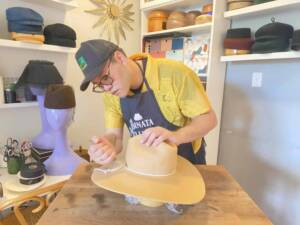
Rowell Concepcion at work in his studio. Photo courtesy of the artist.
What continues to draw me to millinery is that it sits at the intersection of art, design, engineering, and craftsmanship. I love experimenting with techniques and materials, discovering how a flat piece of felt or straw can be transformed into a sculptural form through blocking, shaping, and stitching by hand.
Millinery is also a craft that demands precision. Every decision is visible, and there’s very little room to hide mistakes. That challenge is something I genuinely enjoy. I’m very detail-oriented by nature, and I find satisfaction in refining every curve, proportion, and finish until it feels just right. It’s a slow process, but it’s one that continues to inspire me every time I step into the studio.
Our Craft + Design jury was drawn to the contemporary design and perspective you’re bringing to this centuries-old craft. How do you feel your work fits into (and/or breaks from) the tradition of millinery?
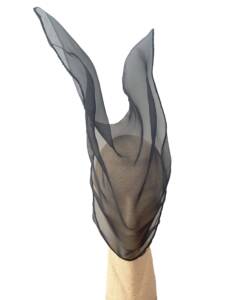
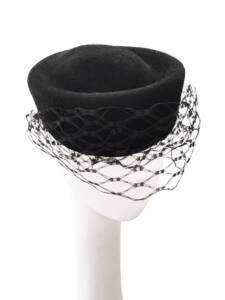
I don’t think of my work as breaking from tradition as much as building upon it. Millinery has centuries of knowledge behind it, and I have a deep respect for the techniques, tools, and makers who came before me. Many of the vintage hat blocks I use today were passed down from previous milliners, and I see myself as a steward of that history. My hope is to eventually pass them on to the next generation so that tradition continues.
Where my work feels contemporary is in how I think about the wearer. I design hats to become part of a person’s life, whether they’re traveling with them, wearing them to a wedding, or performing on stage. I want every piece to feel beautiful, functional, and easy to live with.
I also love creating something that feels modern using traditional techniques and vintage hat blocks. There is something special about shaping a contemporary silhouette from a block that has been used by generations of milliners. To me, that is how a craft stays alive. You honor its history while continuing to push it forward
You are relatively new to this practice, launching Binata Millinery in 2020, and it seems we’re meeting you at a particularly exciting moment in your career. What’s it like to receive such great recognition for your work? How does this moment in your career feel?
Although Binata Millinery launched in 2020, I had already spent years working in the fashion industry, so I understood how competitive it can be. I feel incredibly fortunate that editors, stylists, and customers have embraced my work. Whenever the business feels challenging, I remind myself to be grateful because there is so much talent in the world, and opportunities like these are never guaranteed. I just keep showing up, making the work, and seeing where it leads
With a successful young brand that has been celebrated by the fashion and entertainment industries, what draws you to the craft show world?
Craft is at the heart of everything I do, so I’ve always felt a strong connection to the craft community. While my work exists within fashion, it begins with making. I love working with my hands, learning from other artisans, and being surrounded by people who are equally passionate about their craft. I’ve also always been drawn to art, so craft shows feel like a natural fit. They create space for conversations about process, materials, and technique, and I find that incredibly inspiring.
The work in your portfolio spans from the classic pillbox to contemporary sculptural pieces. As a designer, do you approach these works differently?
Absolutely. Every project begins with understanding how the hat will be used. For my direct customers, I think about how a piece will fit into their lives. Can it travel easily? Does it provide sun protection? Is it comfortable to wear for hours? Those practical considerations are just as important as the design itself.
For editorial, my focus shifts to how a hat will read on camera and contribute to the overall story. For performance, I think about movement, durability, and making sure the piece stays secure while still having impact. The function may change, but the craftsmanship stays the same.
One thing I love about the craft world is that it embraces all of these different approaches. It also encourages experimentation. If a hat doesn’t perform the way I hoped, I rarely see it as a failure. I’ll often take it apart and transform it into something new. In fact, one of the pieces I made for Lady Gaga was created from leftover materials and scraps from previous projects. I think that willingness to keep exploring is an important part of being a maker.
What’s your favorite part of the process?
My favorite part is seeing someone find a hat they truly love. You can almost see the transformation happen the moment they put it on. Their posture changes, they smile a little more, and they carry themselves differently. I’m naturally a very introverted person but running my own business has pushed me outside my comfort zone, and I know firsthand how a hat can give someone a little extra confidence. Being able to create that feeling for someone else is the most rewarding part of what I do.
Richmond, VA isn’t necessarily known for our fashion (no surprise there), but one thing’s for sure: Richmonders know art. What would you say to someone who is interested in and inspired by your work, but feels intimidated to introduce hats to their wardrobe? What do you hope our community here in Richmond takes away from your work?
I think fashion exists everywhere. It may just look different from place to place, and Richmond has such a strong creative community through VCU and its artists and makers. I’d encourage anyone who’s curious to simply come by the show and try a hat on. People often tell me, “I’m just not a hat person,” but I almost never find that to be true. It’s usually about finding the right hat and giving yourself permission to wear it with confidence. That’s what I hope people take away from my work. Hats really are for everyone. Like art, fashion is another way to express yourself, and sometimes all it takes is being willing to try something new.
Interests and opinions expressed by artists are their own. Learn more about VisArts’ organizational values and code of conduct.