Blog
A Conversation with Visiting Artist-In-Residence, Kei Ito
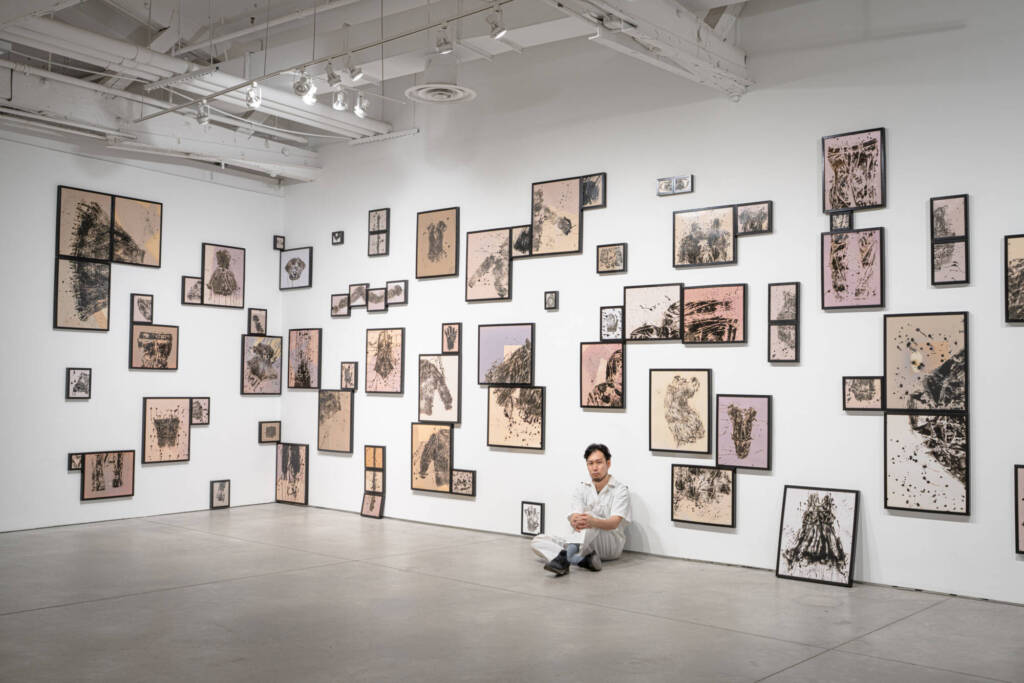
Photo by Kei Ito
If you visit VisArts between now and October 18, 2026, you’ll be lucky enough to catch “Everything Time Touches,” a solo exhibition by Kei Ito, on view in the True F. Luck Gallery.
Curated by Fabiola R. Delgado, the exhibition brings together recent works by Ito that further his ongoing investigation into inherited trauma, bodily memory, and the material traces of history. His photographic practice unfolds as a durational and environmental process, shaped as much by time and contingency as by intention. Ito approaches his work as a performance, prioritizing the process over the completed image.
Prior to the exhibition opening, we had the privilege of hosting Ito for a short residency. Ito spent time creating works in the VisArts darkroom that you can now see in the exhibition.
We caught up with Kei to hear about his experience working in our shared studio space, its influence on the exhibition, and the interplay between his concurrent exhibition at The Anderson Gallery at VCUarts.
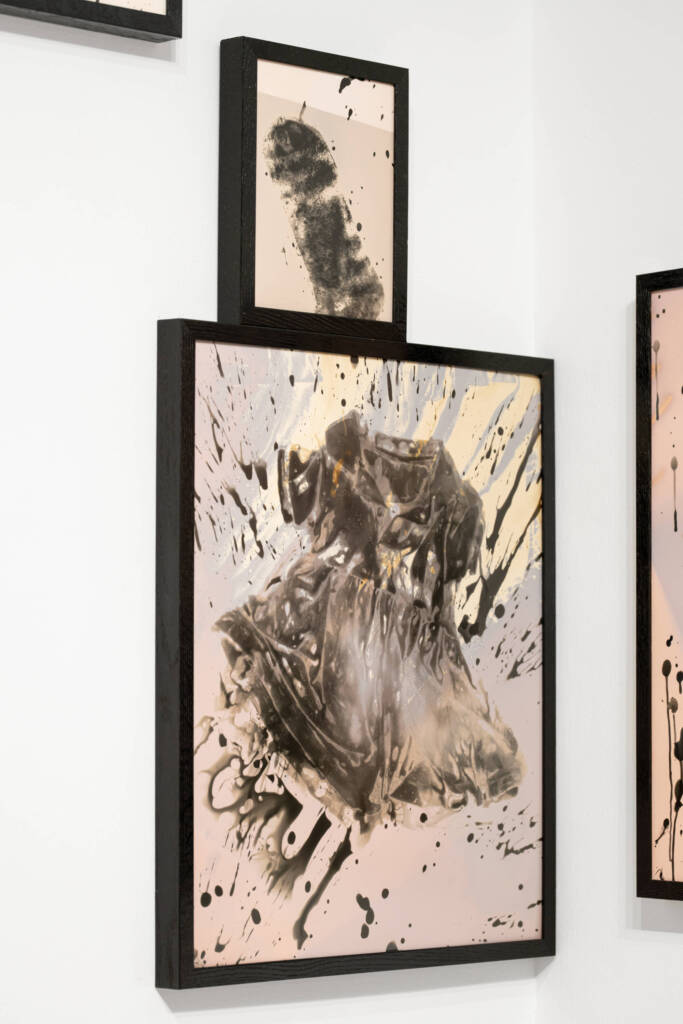
Photo by Kei Ito
VisArts: Have you worked in a shared studio space like VisArts before? How much time were you able to spend in the studio space during your Visiting Residency?
Ito: I have worked in shared studio environments before, particularly through residencies, and I was able to use the darkroom at VisArts.
Most of the work in Everything Time Touches was made beforehand, but some of the smaller 4 × 5 inch prints in the exhibition were made while I was at VisArts. I really valued being able to continue making work during the exhibition rather than treating the installation as something completely finished before I arrived. Having access to the darkroom allowed the exhibition to remain connected to an active process of making and responding to the time and place of Richmond.
While Everything Time Touches is on view at VisArts, you also have a solo show at The Anderson at VCU. How are these shows in conversation with one another? What makes them distinct?
The two exhibitions are closely connected, but they approach similar questions from different directions. Both are concerned with memory, disappearance, and the ways histories remain present even when their physical traces become difficult to see.
At The Anderson, THE LATENT IMAGE OF US is more directly concerned with the idea of the latent image—the photographic image that exists but remains invisible until it is developed. The installation includes photograms alongside a large poem written with loose ash, so the exhibition moves between photography, language, material, and disappearance. The ash is especially important because it is physically present but also extremely fragile; it can be disturbed or erased very easily.
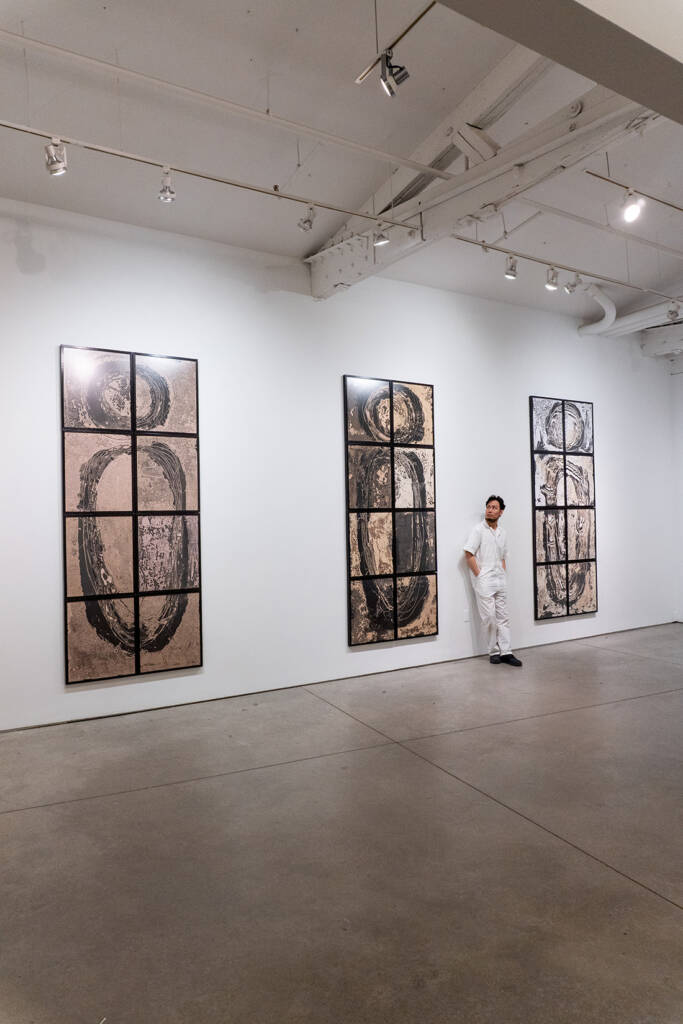
Photo by Eryn Mann, VisArts staff
Everything Time Touches at VisArts is more focused on time as an active material. The works consider what happens when bodies, objects, light, and photographic materials are exposed to time—how something can be transformed, damaged, remembered, or made visible through that encounter.
For me, the two exhibitions almost operate like two parts of the same thought. One is asking what remains latent or hidden within us, while the other is asking what time leaves behind.
You’ve said you approach your work as a performance, prioritizing the process over the completed image. How do you think your work resonates with artists compared to non-artists?
I think artists may initially connect to the work through the process because they understand the physical labor, experimentation, failure, repetition, and uncertainty involved in making something. Many of my works depend on processes that I cannot completely control—sunlight, breath, chemical reactions, the duration of an exposure, or the behavior of a particular material. For another artist, those decisions and limitations can become very visible.
But I do not think someone needs to understand photography or art-making in order to experience the work. In many ways, the processes I use are connected to very ordinary human experiences: breathing, waiting, touching, remembering, forgetting, watching something disappear.
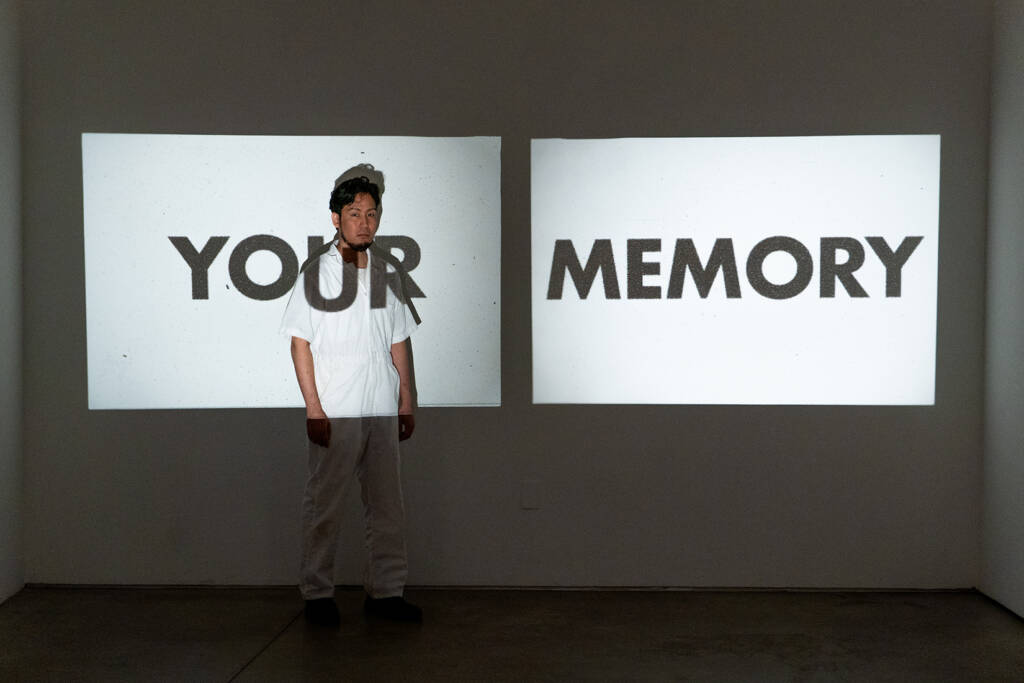
Photo by Eryn Mann, VisArts staff
The photographic object is important to me, but it is also evidence that something happened. Sometimes I think of the finished image almost as a residue of a performance. A viewer may not witness that original action, but they encounter what it left behind. I think that relationship between an event and its trace is something artists and non-artists can both understand, even if they arrive at it from different places.
What are you hoping the viewer will experience and/or remember when viewing your work in this exhibition for VisArts?
I hope viewers experience the work slowly. Much of what I make deals with histories that can feel enormous—nuclear violence, inherited trauma, environmental damage, memory—but I try to approach those subjects through very physical and intimate experiences.
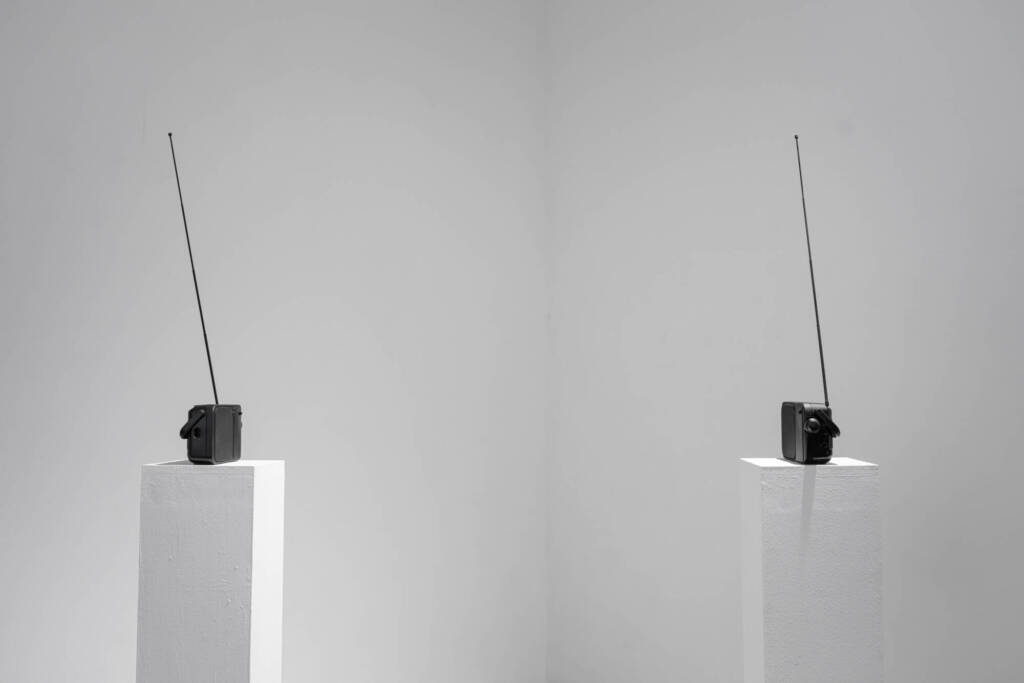
Photo by Kei Ito
Rather than telling viewers exactly what to think, I want the work to create a space where they become conscious of their own body and their own relationship to time. A breath, a shadow, a piece of clothing, sunlight touching photographic paper—these are very small things, but they can become ways of approaching histories that are otherwise difficult to comprehend.
If viewers remember something after leaving the exhibition, I hope it is not necessarily one particular image. I hope they remember a sensation: the feeling that an absence can still have weight, that something no longer visible can continue to affect the present, and that photography can be not only a way of preserving an image, but also a way of thinking about disappearance.
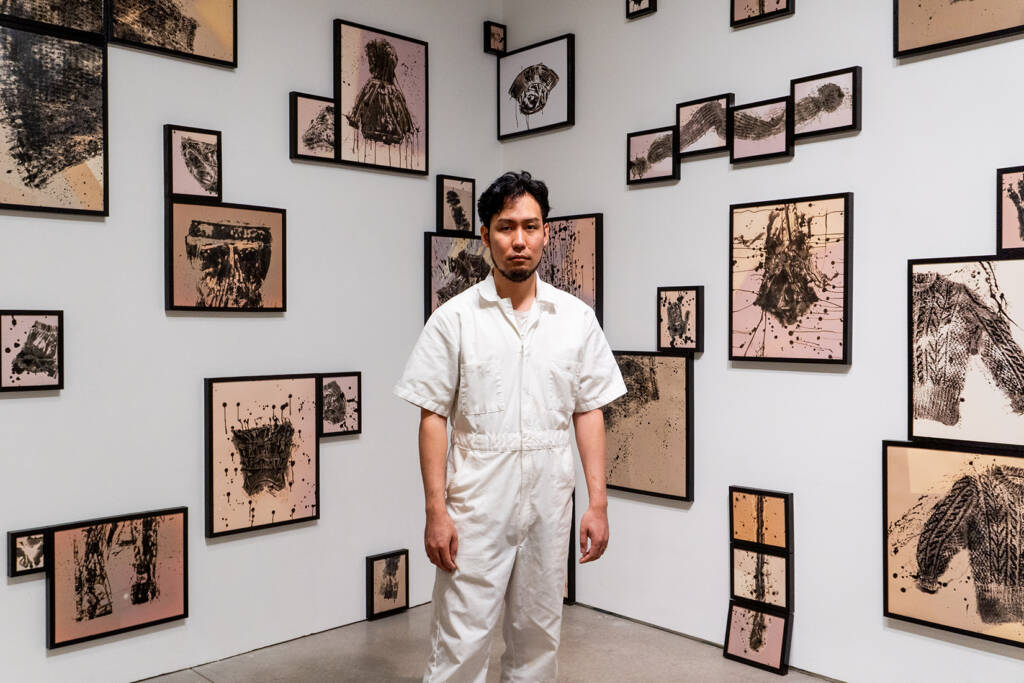
Photo by Eryn Mann, VisArts staff
Learn more about Kei Ito + his work: kei-ito.com | @kei.ito.art
Interests and opinions expressed by artists-in-residence are their own. Learn more about VisArts’ organizational values and code of conduct.